
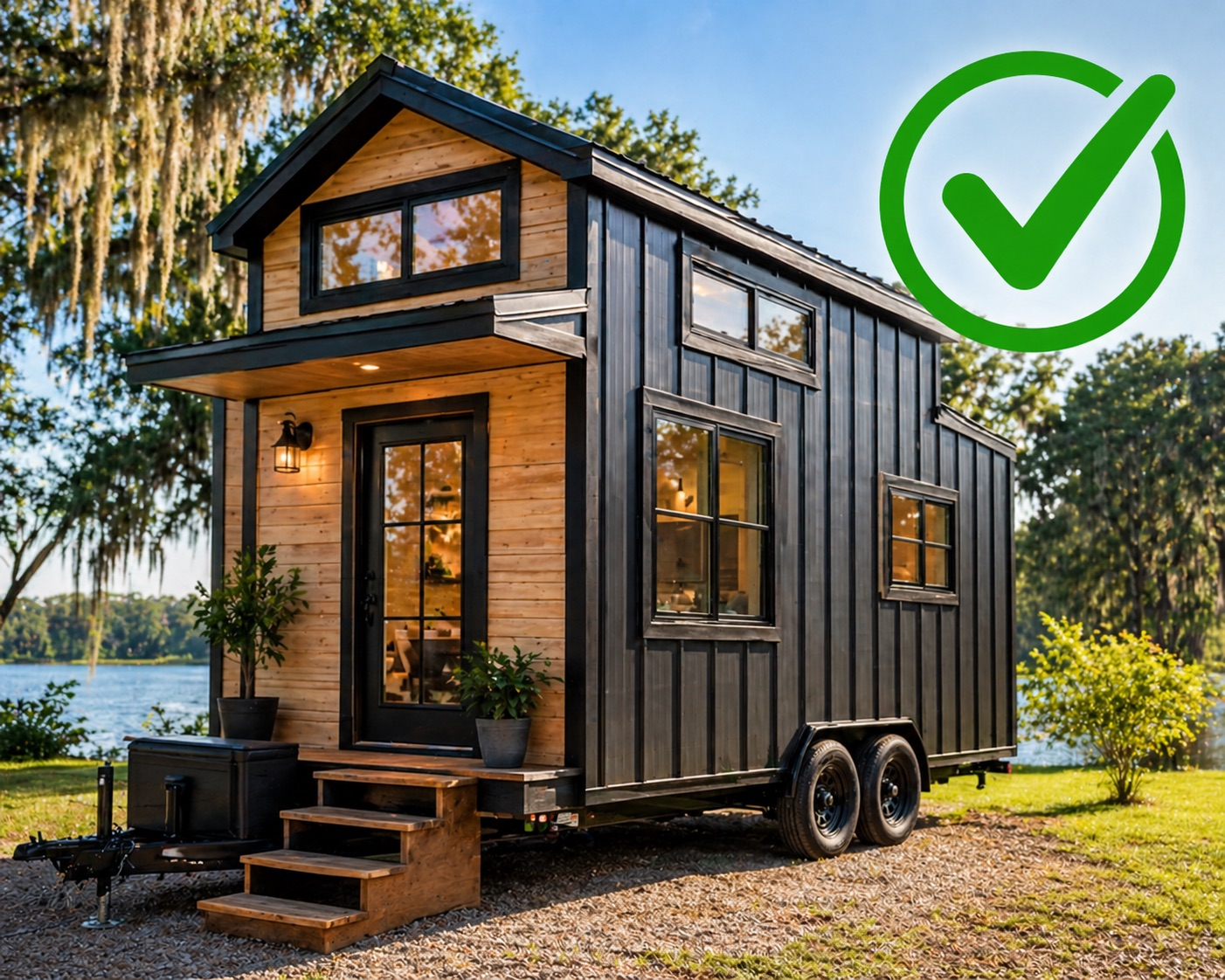
Tiny House Laws in Orlando (Zoning + Rules Explained)
One of the most common questions people ask when considering this lifestyle is whether tiny houses are legal in Orlando, Florida. The answer is yes—but there are important zoning rules, building codes, and location requirements that determine where and how you can live in a tiny home. Understanding these regulations is key to making the right decision and avoiding complications. Visit the guide to tiny house living in Orlando.
Quick Answer
Tiny houses are legal in Orlando, Florida, but where you can live depends on zoning laws and how the home is classified. Tiny homes on wheels are often treated as RVs and may be restricted, while foundation-built tiny homes must meet Florida building codes. The easiest and most reliable way to live in a tiny home full-time is within an established tiny home or RV-approved community.
How Tiny Houses Are Regulated in Orlando
Tiny houses are legal in Orlando, but they are not treated the same as traditional homes. The legality depends on how the structure is built and where it is located. Local zoning laws, building codes, and land use regulations all play a role in determining whether a tiny home can be used as a permanent residence.
In general, tiny homes are allowed when they comply with Florida building standards or are placed in areas specifically designated for RVs or alternative housing. This is why understanding the classification of your tiny home is critical before making a move.
What Qualifies as a Legal Tiny Home?


Tiny Homes on Wheels vs. Foundation-Built Homes
Tiny homes typically fall into two categories, and each has different legal considerations.
Tiny Homes on Wheels (THOW)
- Often classified as recreational vehicles (RVs)
- Cannot be used as permanent residences in all zones
- Must be placed in RV-approved communities or parks
Foundation-Built Tiny Homes
- Must meet Florida residential building codes
- Treated more like traditional homes
- Allowed in areas with appropriate zoning
Because of these differences, many people choose to live in established communities that already meet these requirements.
Where Can You Legally Live in a Tiny House?
In Orlando and surrounding areas, tiny homes are typically allowed in:
- RV parks and designated RV communities
- Planned tiny home communities
- Certain rural or flexible zoning areas
However, placing a tiny home on private land without proper zoning approval can be difficult. Local regulations often restrict full-time living in non-approved areas.
For a broader look at the lifestyle, see our guide to tiny house living in Orlando.
Why Tiny Home Communities Are the Easiest Option
For most people, the simplest way to live legally in a tiny home is within a structured community. These communities are designed to meet zoning and infrastructure requirements, removing much of the uncertainty.
At communities like Tiny Town Orlando, residents benefit from:
- Approved land use for long-term living
- Utility connections already in place
- On-site management and maintenance
- A stable and community-focused environment
You can also explore available tiny house rentals in Orlando to see current options.
Why Tiny Town Orlando Can Be More Predictable
One challenge with traditional housing is managing multiple bills and fluctuating costs. Tiny Town Orlando simplifies this by offering a structured, community-based living model.
Residents benefit from:
- Bundled utilities and services
- Consistent monthly costs
- On-site management and maintenance
- A stable long-term living environment
This makes it easier to plan financially while enjoying the benefits of a lakefront tiny home community in Orlando.
You can also explore available tiny house rentals in Orlando to see current options.
Key Legal Considerations Before Moving
For many residents, the value of tiny house living goes beyond monthly savings. It’s about reducing financial stress while gaining a more intentional and connected lifestyle.
Before choosing tiny house living in Orlando, it’s important to consider:
- Zoning restrictions for your desired location
- Utility access (water, sewer, electricity)
- Length-of-stay rules in RV-designated areas
- Building code compliance for permanent structures
Taking these factors into account will help ensure a smooth and legal transition into tiny home living.
For broader housing standards and guidelines, you can refer to the U.S. Department of Housing and Urban Development (HUD). For those prioritizing affordability and lifestyle, tiny house living in Orlando often delivers better overall value.
Related guides
- 👉 Where Can You Park a Tiny House in Orlando?
- 👉 How Much Does Tiny House Living Cost in Orlando?
- 👉 Best Tiny House Communities in Orlando
- 👉 Tiny House Living in Orlando (Full Guide)
Frequently Asked Questions
Are tiny houses legal in Orlando, Florida?
Yes, but legality depends on zoning laws and whether the home meets building codes or is placed in an approved community.
Can you live full-time in a tiny house in Orlando?
Yes, especially within designated tiny home or RV communities that allow long-term residency.
Are tiny homes considered RVs in Florida?
Tiny homes on wheels are often classified as RVs, which affects where they can be placed and lived in full-time.
Do tiny homes have to meet building codes?
Foundation-built tiny homes must meet Florida building codes, while homes on wheels follow RV standards.
Explore Tiny House Living in Orlando
Understanding the legal side of tiny house living is one of the first steps toward making the move. Whether you’re looking for a long-term rental or exploring the lifestyle, Tiny Town Orlando offers a structured and community-focused way to live comfortably and legally.